Nankai University · Undergraduate 2027 · 13 min read
Published
Nankai University Bachelor's Admissions 2027: CSCA, HSK 4, Tianjin Scholarship & Fees
Nankai University undergraduate 2027: June 4 deadline, CSCA, HSK4 180, 46 Chinese-taught majors, Tianjin Scholarship May 30, RMB 20,000–35,000 tuition and application steps.
Nankai 2027 application period: October 20 to June 4
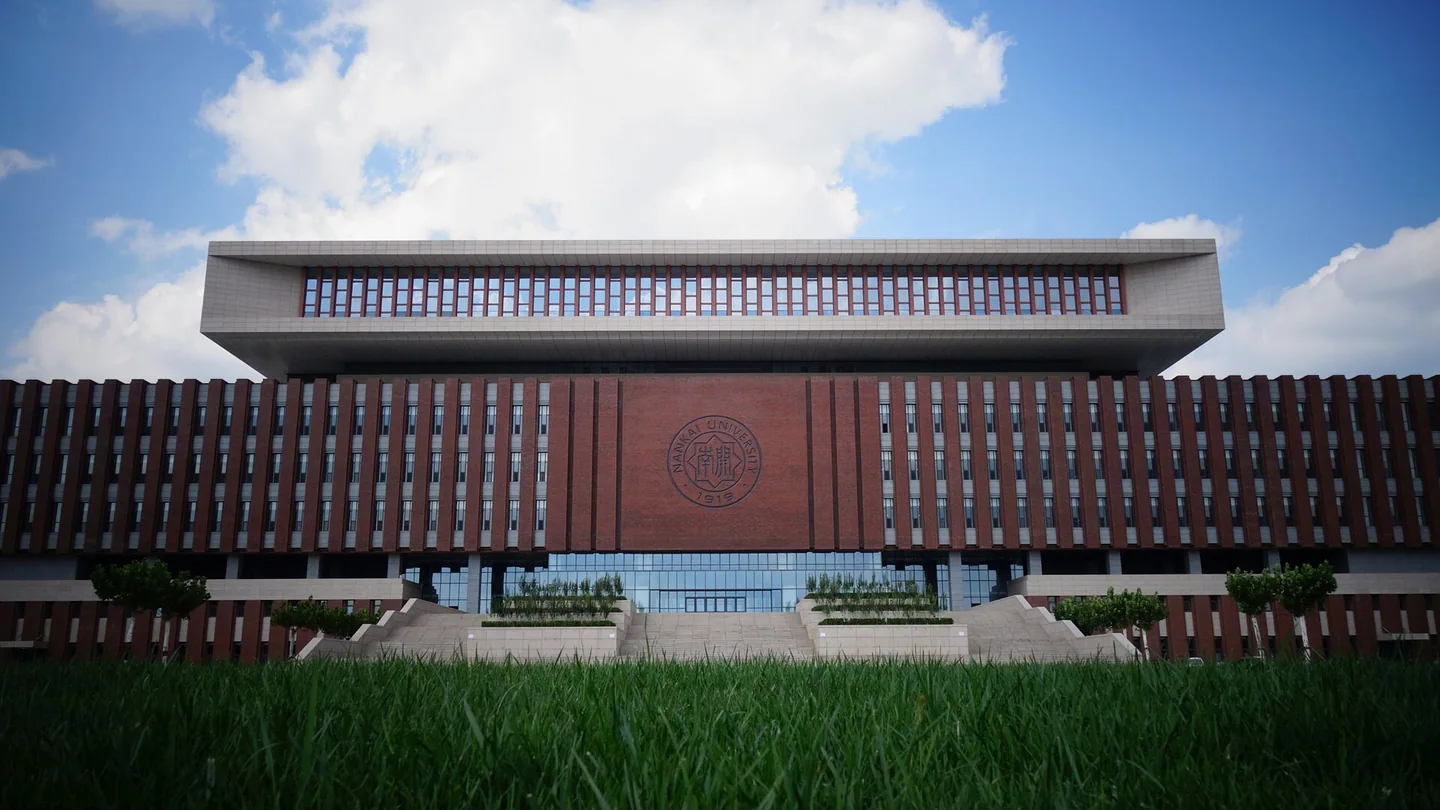
Nankai University (南开大学), a research university in Tianjin, has published the 2027 international undergraduate admissions notice. The application period runs October 20, 2026 to June 4, 2027. That is the university's ordinary undergraduate application deadline, not the date for every government scholarship.
The university offers 46 Chinese-taught undergraduate majors. Most follow a four-year degree programme, while some medical programmes last five years. Nankai describes an international-student educational pathway involving Chinese-language and academic preparation, sometimes called the 1+3 model; eligibility and duration still depend on the actual major.
Applications can list two programme preferences. The school warns that Business Economics and Business Administration accept first-choice applicants only. Students should therefore not place those majors second and assume a chance of automatic consideration.
- Ordinary undergraduate application deadline: June 4, 2027.
- Tianjin Government Scholarship / Study-at-NKU application deadline: May 30, 2027.
- 46 Chinese-medium undergraduate majors in the university's 2027 notice.
- High-school diploma or accepted expected-graduation proof required.
- HSK Level 4 with score at least 180 and valid CSCA test report required.
CSCA is required for all Nankai international bachelor applicants
Nankai's 2027 guide states that all international undergraduate applicants must take the China Scholastic Competency Assessment (CSCA). The test evaluates academic readiness for the selected major. Its component subjects are programme-dependent and should be checked against the official degree catalogue.
The score report is one of the required university-upload files, alongside school transcripts and language evidence. Completing HSK does not remove CSCA, while a good CSCA result does not replace Chinese-language proficiency.
Students preparing for physics, chemistry, finance or international politics should select the correct paper combination for the intended major rather than reuse a friend's or another university's subject list.
HSK, high-school qualifications and age
International bachelor's candidates must be non-Chinese citizens with a qualifying secondary-school diploma, valid travel documentation and acceptable academic and conduct records. Nankai's published age guidance is generally 18–25, with a special guardian-document procedure for accepted students who remain under 18 on September 1, 2027.
For the 2027 Chinese-taught undergraduate programmes, Nankai requires HSK Level 4 with at least 180. Applicants whose earlier education does not satisfy that standard should prepare the Chinese test before paying application charges; the university's academic programme language is not changed by requesting a scholarship.
Applicants in the final year of school can present acceptable pending-graduation evidence, but official final documents must be available before registration as instructed.

Published fees: tuition, housing and application charges
Nankai's 2027 announcement lists undergraduate tuition of approximately RMB 20,000–35,000 per year depending on the major. The application fee is RMB 400, generally payable after receiving a positive admission-stage notice, and the university's instructions say Chinese Government Scholarship recipients do not have to pay it.
Accommodation is listed at approximately RMB 23–60 per person per day depending on campus and room type. Over 300 occupied days, that would equal RMB 6,900–18,000, before food, utility charges or other living costs. These are arithmetic examples, not a promise of room availability or fixed billing.
Insurance and any visa, airfare, transport or personal costs must be budgeted separately. An offer of tuition reduction alone does not remove expenses for living in Tianjin.
Scholarships: Chinese Government, Tianjin and Nankai routes
Nankai lists the national CSC Type A bilateral scholarship through the Chinese embassy or home-country dispatching authority, a separate CSC Type B Silk Road undergraduate route where eligible, the International Chinese Language Teachers Scholarship for its specified major, and Tianjin Government Scholarship / Study-at-NKU funding.
For the Type B Silk Road route, the university says eligible nationality and major restrictions will be announced in April 2027. Successful pre-admission and interview evaluation may lead to a university nomination, after which the scholarship applicant uses CSC Type B with Nankai code 10055. The existence of this route does not guarantee it is open to every nationality or degree.
The Tianjin Government Scholarship or Study-at-NKU route requires applicants to select the scholarship option in the Nankai admissions form, with a May 30, 2027 deadline. Tianjin scholarship nominations depend on achieving university pre-admission status and competitive assessment. The final award specifies whether tuition, stipend or insurance is funded.
Nankai's separate 2027 graduate CSC Type B scholarship guide
Documents: passport, CSCA, HSK and an 800-word statement
The university asks for passport information valid at least through September 1, 2028, a notarised or accepted high-school qualification and transcripts, CSCA score, HSK Level 4, and a personal statement of approximately 800 words addressing academic interests and reasons for applying.
It also requests an appropriate medical examination form completed after November 2026 and any police or legal-guardian documentation under the applicant's circumstances. Former Chinese nationals or children of Chinese nationals may need additional citizenship and residence evidence as prescribed by the university.
Original materials need to be authentic, readable and in Chinese or English, or accompanied by the required translation. Nankai specifically says that documents sent separately by email or post do not substitute for uploads to the official application system.
How to apply to Nankai in 2027
- Check the 2027 programme catalogue and choose two academically suitable Chinese-taught degree preferences; put Business Economics or Business Administration first if targeting those majors.
- Register for the correct CSCA subjects and obtain valid HSK Level 4 at 180 or above.
- Prepare school records, passport, 800-word personal statement, valid health and academic documents and any nationality-related evidence.
- Apply through Nankai's official international-student portal at nankai.at0086.cn/StuApplication/Login.aspx.
- Select the relevant scholarship category within the portal when needed; obey May 30 for Tianjin / Study-at-NKU and June 4 for ordinary undergraduate admission.
- Attend a university interview if invited; assessment includes language and overall academic suitability.
- After admission, follow the university's payment request and receive official electronic admission and JW201/JW202 visa documents, expected from July 2027.

Avoid the wrong scholarship assumptions
Nankai's undergraduate Silk Road programme and its graduate CSC High-Level Programme are distinct. The graduate Type B code and conditions must not be interpreted as automatic undergraduate Type B eligibility.
An undergraduate pre-admission offer is useful but is not itself a full tuition waiver. Students should request written funding coverage, confirm the teaching language and check whether the selected major aligns with eventual professional requirements.
ChinaUniPath provides independent paid assistance with bachelor's programme shortlisting and genuine application documents. Nankai and the relevant government scholarship authority make admission and funding decisions.
Official sources and verification
Read the current official notices before registering for a test or submitting an application.
Related guides
- Tsinghua University Undergraduate Admissions 2027: February 28 Deadline, Fees, HSK and Scholarships
- Beihang University Bachelor's Admissions 2027: CSCA, April 30 Scholarships, May 30 Deadline & Fees
- Xi'an Jiaotong University English-Taught Bachelor's 2027: CSCA, 4 Engineering Majors, Fees & Scholarships
- Donghua University Bachelor's Admissions 2027: CSCA Subjects, HSK 5, IELTS 5.5 & Scholarships
- China University of Petroleum Beijing Admissions 2027: CSCA, IELTS, Scholarships & RMB 25,000 Tuition
For application support, explore our paid admissions consultancy, contact us, or browse scholarship options.